Showing posts with label health. Show all posts

June 01, 2019

Is My Knee Pain Arthritis or a Torn Meniscus?

A torn knee meniscus often has similar symptoms to knee osteoarthritis, making it difficult to know the cause of the pain.
Common symptoms of both osteoarthritis and a torn meniscus include:
  • Pain around the knee joint, especially after activity, such as walking, running, or climbing stairs
  • Swelling, which occurs because of inflammation and may make the knee painful to the touch
  • Knee locking, which means it may be difficult to bend or fully extend the joint
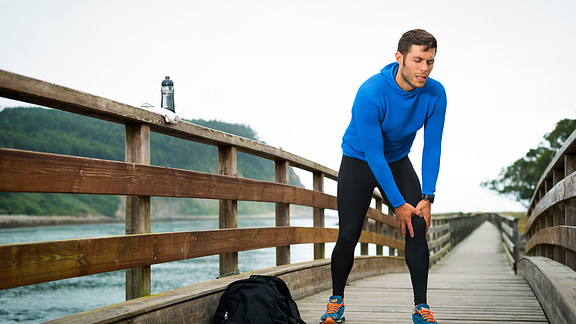

A knee meniscus tear and knee osteoarthritis affect different types of cartilage in the knee:
  • Knee osteoarthritis refers to damage to articular cartilage. Articular cartilage is tough, slippery material that covers and protects the bottom of the thighbone (femur), the top of the tibia (shin bone), and back of the knee cap (patella).
  • A torn meniscus refers to damage to a rubbery, flexible piece of cartilage that provides cushioning between the thigh bone and shine bone in the knee.
Below you’ll find a few questions to ask yourself when determining the cause of knee pain, however, a visit to a health care professional is the best way to get an accurate diagnosis.

When did the pain start?

The biggest difference between arthritis and a torn meniscus is whether the pain developed over time or following an injury.
  • If your knee pain increases gradually and cannot be placed back to a specific injury you may have arthritis.
  • If your knee pain arose suddenly, you may have a meniscus tear. Athletes, especially those who play soccer, football, or basketball, are more likely to experience the type of injuries that cause meniscus tears.
It is possible for a meniscus to break down slowly, but this is less common.

What does the pain feel like?

Another difference between arthritis and a torn meniscus is how the pain feels.
  • People with osteoarthritis often report an intermittent, dull, or aching pain. The breakdown of cartilage may cause the bones to grind against each other when moving, which can cause a feeling of stiffness or produce a crunching sound.
  • People with a torn meniscus often complain of sharp, immediate pain following an injury. The pain may go away with rest and return again with movement, especially the same type that caused the injury. Tenderness to the inside or outside of the knee may indicate a meniscus tear.
Exactly how the pain feels will be determined by the severity and location of the arthritis damage or meniscus tear.

Have you tried the Thessaly test?

A meniscus tear can be tested for by using a diagnostic exam called the Thessaly test. You can do this yourself while resting your hands on a counter or another person for support.
  1. Stand on the leg to be tested with your knee bent slightly (about 20 degrees). Bend your opposite knee behind you, so that your foot is off the floor.
  2. Keeping your foot planted, twist your body so your hips rotate back and forth 3 times.

If you experience a catching or locking feeling during the test, you may have a torn meniscus.

How old are you?

Age is not just a number when it comes to determining the cause of knee pain. Arthritis is a degenerative disease, meaning it is more likely to occur in older adults.
A torn meniscus is a cartilage injury that can happen at any age, although more likely to occur in the younger, active, population.

Getting a diagnosis and treatment for knee pain

Whether you think you have knee arthritis or a torn meniscus, your best bet is to visit a health care professional for an accurate diagnosis and treatment. Early treatment can prevent your symptoms from worsening and, in some cases, help you avoid future surgeries.

February 11, 2013

How Much Fats Do You Need For Better Health and Fat Loss?

 http://t0.gstatic.com/images?q=tbn:ANd9GcQ0jXLiBgSTw5ZjZwzVhb3oaynaIihQMqn_c0xH1tQ-gDIefpjz

 How Much Fats Do You Need For Better Health and Fat Loss?
  • Add 2 teaspoons of olive oil per meal in your vegetables or to your meat when you cook it.


  • Do not add oil to a meal if you are eating a fatty fish like salmon which is rich in good fats.


  • If you do not like olive oil or oily fish, eat your grilled meats and your natural vegetables but do not forget to add another source of good fats. What you can do in this case is to consume 15-20 grams of almonds or walnuts twice a day with any meal.
I recommend that you try as hard as possible to get your good fats from these natural sources. If you have issues consuming your good fats from food, I recommend an Essential Fatty Acids supplement like Labrada's EFA Lean which contains a variety of good fats. I suggest a dose of 3 capsules in 2 of your fat free meals.

Now that we have covered the myth that in order to lose fat you need to stop eating fats, let's talk about the sort of food that you can eat in order to promote fat loss.


Foods That Promote Fat Loss

When we start a diet, the first thing to do is to make the right food choices. I will eliminate all of the confusion on what to eat by detailing exactly what foods help to promote fat loss:

  1. Choose the right carbohydrates like whole grain pasta, brown rice, oatmeal, potatoes, peas, corn (and yes, these are vegetables but in the category of starchy carbohydrates). Forget processed carbohydrates that come from candy, cakes, processed breads, cereals and breading as these will get you fat.


  2. Choosing the right proteins like chicken (knowing that the chicken breast is much less fatty than other parts such as the thigh or the wings), white fish and salmon (yes, salmon is a fatty fish but the fats are GOOD fats loaded with Omega 3s), 90% lean steaks, egg whites (with 1-2 egg yolks as these also contain good fats), and turkey. Avoid pork (because it is high in saturated fats) and reconstituted meats such as chicken nuggets, Cordon Bleu, deli meats and fast foods that contain lots of fat.


  3. Don't forget to eat your vegetables. The best vegetables you can eat are: green beans, broccoli, cauliflower, mushrooms, spinach, asparagus, lettuce, tomatoes, peppers, cucumbers, garlic, and onions. You can have a desert, but it has to be a healthy one.


  4. Concentrate on low calorie desserts like Sugar Free Jello and you can also have a piece of fruit with it. Samples of good fruits are: apple, kiwi, peach, strawberry, pear, pineapple, watermelon. All these fruits are good for health but like all fruits, they contain fructose. Thus, for the best fat loss, do not eat more than 2 of these fruits per day when on a fat loss diet. Note: Take a look at Hugo's article on Why Fruits Need to be Limited During a Fat Loss Diet?


  5. For good fats, concentrate on getting them from the following sources: extra virgin olive oil, almonds, walnuts, hazelnuts. Eliminate butter, cheese and other sauces that come already prepared as they usually contain added sugars and the wrong kind of fats!
Putting It All Together and Creating Your Balanced Diet

With all these food choices, it is now easy to compose a balanced meal without bad fats. What is a balanced bodybuilding diet you may ask? One that consists of 5-6 small meals a day consisting of 40% carbs, 40% proteins and 20% fats as laid out in Hugo's Characteristics of a Good Nutrition Program.

A normal man needs 2000 to 2500 calories a day. Thus, at 40% Carbs/40% Proteins/20% Fats he will need around 200-250 grams of carbs, 200-250 grams of protein and 45-55 grams of good fats per day divided over 5-6 meals. (Note: 1 gram of carbs = 4 calories, 1 gram of protein = 4 calories and 1 gram of fat = 9 calories).

A normal woman with average activity who is weight training and looking for fat loss needs 1200 to 1500 calories per day. That comes out to 120-150 grams of carbs, 120-150 grams of protein and 26-33 grams of good fats per day divided over 5-6 meals.

Conclusion

There you have it! Now you have a very good base to design your diet and get started on your way to fat loss. The power is within you!

About the Author

Cecile Bayeul was born in France in 1982 in a firefighter family. She wanted to become a firefighter and passed the tough professional firefighter tests which included various physically demanding feats. However, she decided to keep a more peaceful job (as her family wanted her to) so she became a nurse.

As a registered nurse she ended up studying various diet protocols for patients with special nutritional requirements due to their sicknesses.

In order to relieve stress from her job and to heal from an anorexia caused by a difficult divorce she picked up natural bodybuilding. Through bodybuilding she learned to regain her confidence and to be happy with her body.

Her passion for fitness led her to start conducting personal training not only for women but for men as well. She teaches that by embarking into a fitness program you can achieve any body that you want; something that builds up faith in oneself and develops the valuable skill of goal setting; things that at the end of the day improve every single aspect of your life!

December 12, 2012

Your Health is Your Wealth


I used to be the person who loaded 99c packets of white pasta into my trolley, together with the 99c loaves of white bread, and went home feeling pleased that I had stuck to my $100 grocery budget.
It never occurred to me that saving money, by living on cheap food, might be a false economy. Not until I started researching the stuff that gets put into our food.
Nowadays, our grocery bill is roughly twice the amount it used to be. I realise that’s quite a large chunk if money is tight.
But is the food we eat really an “expense”…Or is it an investment?
My experience has taught me that it’s the latter, and here’s why:
1. Good health will save you money in the long run.
Of course there’s all the usual things like, less down-time through sickness or ill-health, less money spent on medications, less money spent on doctors and specialists, and increased productivity due to more energy and motivation.
But there’s other benefits, too, like healthier skin and hair.
It pains me to admit that over the last decade I have probably spent thousands of dollars on skin and hair-care products, with the thought that THIS one might make my hair glossy, or my skin glow….
They never did. Because the truth is, that mediocre skin and hair are less about the product you use, and more about what you put in your mouth.
I no longer waste my money on pretty products, endorsed by the latest TV star. I use only a couple of good quality products, like pure coconut oil as a moisteriser, or raw organic honey as a face-mask. If I can’t eat it, I don’t put it on my skin.
But the best benefit of all is mental health.
Take care of yourself, and you’ll think clearer, and more positively, and more creatively than you ever have before.
You simply cannot put a price on this…which brings me to my next point.
2. Good health is priceless.
Midway through 2010, after researching food additives and cosmetic ingredients, I set about to change not only our diet, but our whole lifestyle. We cut out sugar, yeast, white flour, tap water, almost all packaged foods, and any personal care product that wasn’t completely natural.
We switched to organic sourdough breads, organic dairy products, wholemeal grains, and LOTS of fruit, vegetables and nuts.
In the beginning we felt worse….
But then we began to feel better – much better. In fact, so much better, it just wasn’t worth going back.
Some of the health benefits we’ve experienced from eating better are:
- Our youngest son’s eczema disappeared, leading to a much happier little boy who started to sleep through the night for the first time ever. (He was 14mths old at this time.)
- Our older son’s reading and concentration at school dramatically improved, and his hyperactive behaviour improved to the point, that I can now tell if he’s eaten food with additives in it, without anyone telling me. The change in behaviour is that obvious!
- My energy levels improved beyond recognition. No more “nanna naps” or mid-afternoon slumps.
- My husband’s regular bouts of hives vanished, and so did the hay-fever that made him miserable every Spring.
- Colds, flus and upset tummies are now a rarity in our house. Yes, even with children attending school and childcare.
The improved quality of life and the feeling of well-being is something that all the money in the world cannot buy.
Think about it. There is nothing more de-motivating and disheartening, than constant illness, fatigue or allergies.
An investment in your health is really an investment in you reaching your potential, and living the full and rewarding life that we all wish for ourselves and our children.
And that, by my definition, is true wealth.

September 14, 2012

Stopping the weight-gain: Menopause


http://www.healthyfood.co.nz/sites/default/files/styles/190xvariable/public/articleimages/1184.jpg


Menopause is well known as being a time when weight is gained. Eating well and being active are key.
Menopause causes the greatest revolution in hormone levels. Blamed for many things during a woman's life, her hormones are now also maligned for causing weight gain. As well as the
effect of age, falling levels of the female hormones oestrogen and progesterone further reduce the rate at which energy is used – known as metabolic rate. This is reflected in the dietary
recommendations for women over the age of 50. The amount of kilojoules recommended each day is less, but the amounts of vitamins, minerals and protein remain roughly the same.
So eating healthily, without some of the 'extras', is vitally important to stay fit and well. Remaining active will also help keep weight stable. Although many women feel lethargic and low during this time of change, activity boosts metabolic rate, as well as feelings of self-esteem and self-worth.

Tummy trimming tips for menopause

  • A brisk walk each day is one of the best ways to help yourself feel better, and can be enjoyed with friends too.
  • Don't skip breakfast. Missing meals does not help weight control and can leave you feeling even more tired and lethargic.
  • Take a tip from the Japanese, the masters of portion control. Keeping the amount we eat at each meal in check is important for controlling weight, and there is some evidence it can help us live longer too.
  • If grandparenthood finds its way to you, allow your grandchildren to run you off your feet – it's good for you, if exhausting!
  • Enjoy this time of life to the maximum, but indulge yourself in non-food treats. Sadly, you will start to lose friends to some of our common lifestyle illnesses, such as heart disease and cancer. Although these usually take years to develop, it's never too late to help yourself by eating well.

September 10, 2012

Minimum Health or Maximum Health? That is the Question!

http://www.watershed.net/images/site_general/health-protocol.jpg

Picture yourself in one of the following scenarios.


You're cruising along in your new car by the ocean or in the mountains near the ski lodge, or just a leisurely drive through a beautiful forest or in the country. You stop and smell the fresh air you hear the scenic sounds. You are at peace.

You're relaxing on the patio of your new home - you see the mountains or lake in the distance. Your friends are over as you barbecue in your new back yard. Everyone loves your new home. Or you're out on the lake in your new boat with family or friends. Feel the breeze in your face - smell the fresh scents in the air.

Picture yourself on vacation - you are on the deck of a cruise ship - you are on the top deck under the stars. You feel the warm tropic breeze in your face. The full moon is reflecting off the water as you are holding the one you love in your arms.

We analyze the lives most of us actually have and what our lives could be and the role they play!

The question is who would want only minimum health (or worse) when they could have maximum health!


Maximum health is like you feel when you ask that special someone for a date for the first time and they say yes!

Minimum health is when you ask that special someone out and they tell you, that is the Saturday night when they have to do the laundry and wash their hair!

Picture maximum health as cruising next to the ocean in a sport car convertible with your lover next to you..
Picture minimum health as stuck in traffic in your 10-year-old station wagon with the air conditioner broken.

Maximum health is like being on a honeymoon on your own private beach in Hawaii. Running down the beach at night with the one you love with the warm tropic wind in your hair. The huge moon shining down on the palm trees and the tranquil bay.

Minimum health is stuck working overtime in an un-airconditioned office with a huge pile of paperwork stacked on your desk. In walks your boss - the one with all the personality of a geek with BO. He can't stand going home to his abusive wife so he works 14 hour days and gives dirty looks to his employees when they leave before him. Your boss starts yelling about some stupid unfinished report...

Minimum health is like living paycheck to paycheck - just getting by, just barely having enough money to pay the bills each month. Minimum health is like Darling we have a little extra this month - would you like to go out to eat at McDonalds and get a Big Mac?

Maximum health is sailing away on a cruise ship to the Caribbean with the one you love while dining in elegance each evening!


 http://www.stangelas.nuigalway.ie/images/news_pictures/186.jpg

 Sure the above minimum health situations aren't going to kill you (or at least not immediately), but is this the way you want to live your life? Do you really want to just scrape by when there is an option? Let's examine the statement ...aren't going to kill you or at least not immediately.


Minimum health is simply the current absence of real illness or disease. Often people in minimum health are often too tired or sluggish to do things, they are overweight, etc. They don't feel real bad but they sure don't feel terrific. And what about our statement, some would argue that the above minimum health scenarios lead to premature and even a slow death!

Actually the attitude of minimum health is like too many other attitudes we have. We are always too willing to sell ourselves short. We are too willing to settle for second best even when we don't have to. Too often this attitude can flow over into our jobs and relationships. This over the course of a lifetime can cause us much unhappiness and cost us a lot of money.

But the real issue here is minimum versus maximum health and what are we doing to strive toward maximum health? For example do you take high quality nutritional supplements or are you depending on the fast and processed foods to get all your nutrients? I would encourage you to take high quality vitamin and nutritional supplements with enzymes, antioxidants and dietary fiber along with exercise and weight management on a daily basis to strive toward maximum health.

September 07, 2012

Quick and Easy Ways to Start

Quick and Easy Ways to Start
Get started on a healthier lifestyle with these ideas!
No time for breakfast?
  • Grab an apple, an orange or any other fruit as you head out the door.
  • Pack baby carrots, nuts, or dried fruit for a snack.
  • Take whole wheat crackers, lean meats and low-fat milk along with you.
  • Try taking leftovers and eating on the way.
  • Munch on veggies, pretzels, or popcorn.
Mom with children at the grocery store
At a fast food restaurant?
  • Try a grilled chicken sandwich and a side salad.
  • Split an order of fries.
  • Leave off the mayonnaise, sauce and spreads when ordering a sandwich.
  • Share a rich dessert with a friend.
Want to cut fat in meals?
  • Use a cooking spray instead of oil to sauté foods.
  • Trim visible fat from meat and remove skin from poultry, too.
  • Instead of cheese and heavy salad dressings, add fiber-rich beans and peas to your salad meals. Canned chick peas or other beans are a delicious addition to a salad.
Woman making dinner
Need to get moving?
  • Work off a big lunch by taking a bike ride or a walk with your kids after work.
  • Instead of socializing with friends by watching videos or dining, plan to go walking, biking or dancing.
  • Aim for the farthest parking spot, not the closest, so you can get in extra walking.
  • Walk the sidelines or stroll around the field instead of lounging in the stands while the kids play soccer or softball.
  • Run up and down the stairs with each load of laundry, get up and change the channel, and walk to your co-worker’s office instead of calling.
  • Join a step aerobics, kick-boxing or body toning class. Check your local park district, recreation center, or health club to find the best option for your budget and skill level.
Family gardening

September 06, 2012

Top 10 healthy food traps

Top 10 healthy food traps

You may think these foods are healthy choices but moderation is the key. They can be weight-gain traps.
http://www.healthyfood.co.nz/sites/default/files/styles/190xvariable/public/articleimages/2420.jpg

1. Nuts

Are high in fat – most of them are around 50% fat – and therefore high in kilojoules. Even though many of them contain good fats and useful antioxidants, eat them in tiny quantities to get their positive benefits without adding too many extra kilojoules.
Three Brazil nuts contain over 200% of the recommended dietary intake (RDI) for selenium, 7.8g of fat and 320kJ; 1 tablespoon of raw peanuts has 4.5g fat and 220kJ.
So a healthy snack will just be a few nuts, maybe with a piece of fruit; or include a few nuts with your breakfast cereal to get their health benefits without too many extra kJ.

2. Fruit juices

Are energy-dense. You're better off eating a whole piece of fruit which is not only lower in energy but more filling as the juice doesn't contain the fibre.
1 glass of freshly squeezed orange juice has around 435kJ but an orange has half that amount. If you love fruit juice try 1/2 a glass of juice diluted with water and limit yourself to one a day.

3. Olive oil

1 teaspoon of oil or 1 teaspoon of butter both equal 5g of fat. Olive oil is a better type of fat but just because it's better for you doesn't mean you can add LOTS of it!
1 teaspoon of olive oil adds 173kJ. Get the benefits of the monounsaturated fats and antioxidants found in extra virgin olive oil by mixing smaller amounts of 1/2 oil and 1/2 balsamic (or any other favourite) vinegar to 'sprinkle' over salads.

4. Canned fish

A healthy protein choice, high in calcium and sometimes omega-3, but choose the ones in spring water or brine as those in oil can have the equivalent of 3 teaspoons of fat in the can (and it's often not a good oil).
Check the labels on canned salmon and tuna for the omega-3 content as some are an excellent source of this beneficial fat. Go for ones with 400mg or more of EPA+DHA in a serve.

5. Muesli bars

Come in all sorts of shapes and sizes – choose one that is whole meal, oven-baked fruit filled. A good starting point is a bar with less than 600kJ, less than 5g fat and less than 9g sugar.

6. Muffins/carrot cakes

Can just be 'cakes' in disguise. Buy (or make) fruit and bran varieties and make sure they are cup-cake size – not Texan sized!
To make a traditional muffin recipe healthier: halve the amount of flour, and add unprocessed bran (2 times the volume as it's lighter); cut the fat right down but add fruit for moisture; use a light polyunsaturated margarine instead of butter and use trim milk.

7. 'Lite' chips

Lite refers to the thin cut of the chip and possibly lightly added salt. These still contain approximately 3 teaspoons of fat in a small 50g packet!
Chips are a no-go zone for anyone wanting to watch their weight. Find healthier snacks you'll enjoy instead. Try a few rice crackers with light cottage cheese, carrot or celery sticks with a low-fat dip.

8. 'Baked not fried'

Does not necessarily mean low-fat. If you see this claim on the pack, check the fat content per 100g and compare it to other similar products. Whether baked or fried, some crackers can be over 25% fat.
Why not try rice crackers, water thins, litebread, Ryvita, rice thins or others with less than 5% fat?

9. Caesar salad

Just because there's some lettuce in it doesn't mean it's healthy: a classic French dressing, loads of parmesan and deep-fried croutons, sometimes with fatty bacon added, make this salad high in fat.
For a healthy version try this Caesar salad recipe using grilled wholemeal bread croutons, less parmesan, less oil, lean bacon and a light mayonnaise.

10. 'Fat-free' confectionery

Most sweets get their energy from sugar not fat, so this claim bears no relationship to the energy content of the confectionery. Look at the nutrition information panels to compare energy content of different products.
If you crave a sweet treat try sugar-free gum; flavoured water; grainy bread with honey; a low-energy ice cream or frozen yoghurt; or a low-kilojoule chocolate drink like Jarrah Chocolatté.

Breastfeeding mums: Eating for maximum energy

Breastfeeding mums: Eating for maximum energy


http://www.healthyfood.co.nz/sites/default/files/styles/190xvariable/public/articleimages/7776.jpg

After nine months of anticipation, anxiety and excitement, your baby finally arrives! And so begins another important step in your journey as a mother – feeding and nurturing your baby outside the womb. Breast milk provides the best start for your baby, but juggling frequent feeds with sleeplessness and busy-ness can be a real challenge. How do you give your baby the best possible start in life while still looking after your own needs?

What you need when breastfeeding

Your baby depends on you to provide energy and nutrients for healthy growth and development; their birth weight will double by five to six months of age. But the good news is eating a nutritious, varied diet, keeping yourself well hydrated, and having plenty of rest will ensure your breast milk provides all your baby’s needs and that you’re healthy and well, too – your baby needs a healthy mum.
While breastfeeding you will need an additional 2000-2100kJ (energy) per day. That’s the equivalent of another meal. It’s important to get this from nutrient-rich foods, not junk foods, as your baby depends on you for vitamins and minerals.
  • Vitamin C needs almost double while breastfeeding, plus you need significantly more vitamin A and folate; so consume at least six servings of fruit and vegetables per day. That’s four servings of vegetables and two servings of fruit. Include plenty of dark leafy greens and coloured fruits and vegetables.
  • More good quality carbohydrates are needed to fuel the breastfeeding process. Choose whole grain carbohydrates as these provide important B vitamins and are a rich source of dietary fibre – you need 30g of dietary fibre per day while breastfeeding, that’s as much as a man! Eat at least seven servings of whole grain carbohydrates per day, like grainy breads, muesli, porridge and brown rice.
  • Extra protein is needed while breastfeeding to provide for your baby’s growth, so enjoy more protein-rich foods. These are also a great source of iron, zinc and vitamin B12, and you need more of zinc and vitamin B12 while breastfeeding, too. Eat at least two servings of protein-rich foods per day. This includes lean meats, eggs, fish, chicken, legumes, nuts and seeds.
  • Milk and other dairy products provide protein and plenty of riboflavin for you and your baby. So consume more dairy products while breastfeeding – aim for at least three servings of low-fat dairy products per day: enjoy a glass of milk, pottle of yoghurt, cheese or a little low-fat ice cream.
  • If you were thirsty while pregnant, you might be surprised to learn you need even more fluids while breastfeeding! Drink around 10 cups of fluids per day, depending on the temperature and humidity in your environment. This will help to prevent constipation and provide the necessary fluids for making breast milk. While breastfeeding, enjoy water and trim milk, limit caffeinated drinks, and completely avoid energy/smart drinks and alcoholic drinks.
  • Iodine needs increase while breastfeeding but unfortunately your diet most likely won’t  provide enough iodine. Instead take a daily 150mcg iodine supplement while breastfeeding.
  • NOTE: Folate supplements aren’t required while breastfeeding.

Putting theory into practice

Life with a newborn baby can be overwhelming. Your baby has a tiny tummy and needs frequent feeding. In the first weeks you may be feeding between eight to 12 times per day, leaving little time for housework, shopping, cooking, socialising or just relaxing.
Set the expectation with yourself that the first few weeks of your baby’s life will involve frequent nursing and this is normal – then adjust your life to fit around this. Your first priorities are to eat a healthy, nutritious diet, to rest and relax as much as possible, and to breastfeed your baby. Your time and energy is now at a premium so use these ideas to reduce your load:

Set your priorities

Learn to say no. You’re not here to please other people. The world won’t end if you haven’t vacuumed or done the dishes, so let small things slide.

Don’t be a martyr

Accept help if it’s offered, let people do your housework or make a meal.

Ask for help

Get your partner to prepare meals, ask friends and family to provide a home-delivered meal or do some housework. They won’t mind when the reward is a cuddle with your beautiful baby!

Use shortcuts to save time and effort

You’re not trying to win any culinary awards, just survive day to day, so cook quick, easy, nutritious meals in bulk to freeze and provide multiple meals.

Multi-task

While breastfeedin,g rehydrate yourself with a glass of water or milk and a nutritious snack to keep your energy up.

Be prepared

  • Prepare for feeds – visit the bathroom, grab the telephone, a magazine, a glass of water or milk and a healthy snack before you settle in to feed baby.
  • Ask your partner to prepare snacks – such as cut up fruit and veges – for your day.
  • Keep portable snacks in your nappy bag, such as a muesli bar and a bottle of water.

Tasty, simple snack ideas

Make nutrient-packed vegetables and fruits your first snack choice.

  • Home-based snacks – baby carrots, ready-cut celery sticks, plastic pottles of fruit, cut/whole fresh fruit, low-fat yoghurt, bowl of cereal with trim milk, whole grain sandwich/toast topped with banana, Marmite, cheese, jam or baked beans, rice crackers with hummus, salt-reduced soup-in-a-cup.
  • Snacks on the go – banana, apple, small handful of dried fruit and nuts, box of raisins, vege crisps, popcorn, muesli bars.

Conserve your time and energy: make easy dinners in bulk, to freeze in single-servings.

  • Chilli con carne – make in bulk, serve on rice or baked potato with reduced-fat sour cream, on nachos with grated reduced-fat cheese, or in a tortilla wrap with lettuce/tomato/reduced-fat sour cream
  • Beef or chicken enchiladas
  • Salmon or tuna pasta salad – use leftover pasta and tinned fish
  • Chicken/beef stir-fry – use pre-sliced chicken/meat, frozen stir-fry vegetable mix and a dash of teriyaki or oyster sauce.

Tackling ‘baby weight’

Women’s bodies may maintain extra body fat stores until a baby’s birth as these ‘energy deposits’ help to meet the energy needs of breastfeeding. So it makes sense that breastfeeding is the best way to kick-start weight-loss, along with consuming a nutritious diet and undertaking regular physical activity. We’re not suggesting Thai kickboxing, just head out with the stroller for a 30-minute walk most days.
Your baby’s first months are a crucial time and you don’t want to reduce your milk supply by drastic dieting. So focus on eating a healthy diet (ditch the high fat/sugar/salt treat foods) and let your weight naturally reduce. Aim for a gradual, steady weight-loss over nine to 12 months (that is, no more than 0.5kg per week). Take no notice of celebrities who seem to snap back into shape weeks after giving birth. That’s not realistic for most women in the real world.